Tirthan Valley Travel Guide: Everything You Need to Know Before You Go
Tirthan Valley is Himachal Pradesh's quieter, greener alternative to Manali — dense forests, a trout river, UNESCO wilderness, and homestays starting at ₹800 a night. Here is exactly how to plan it.
Tirthan Valley sits in the Kullu district of Himachal Pradesh, tucked beside the Great Himalayan National Park — a UNESCO World Heritage Site. Most people drive past it on the way to Manali. That is their loss, and quietly, your gain.
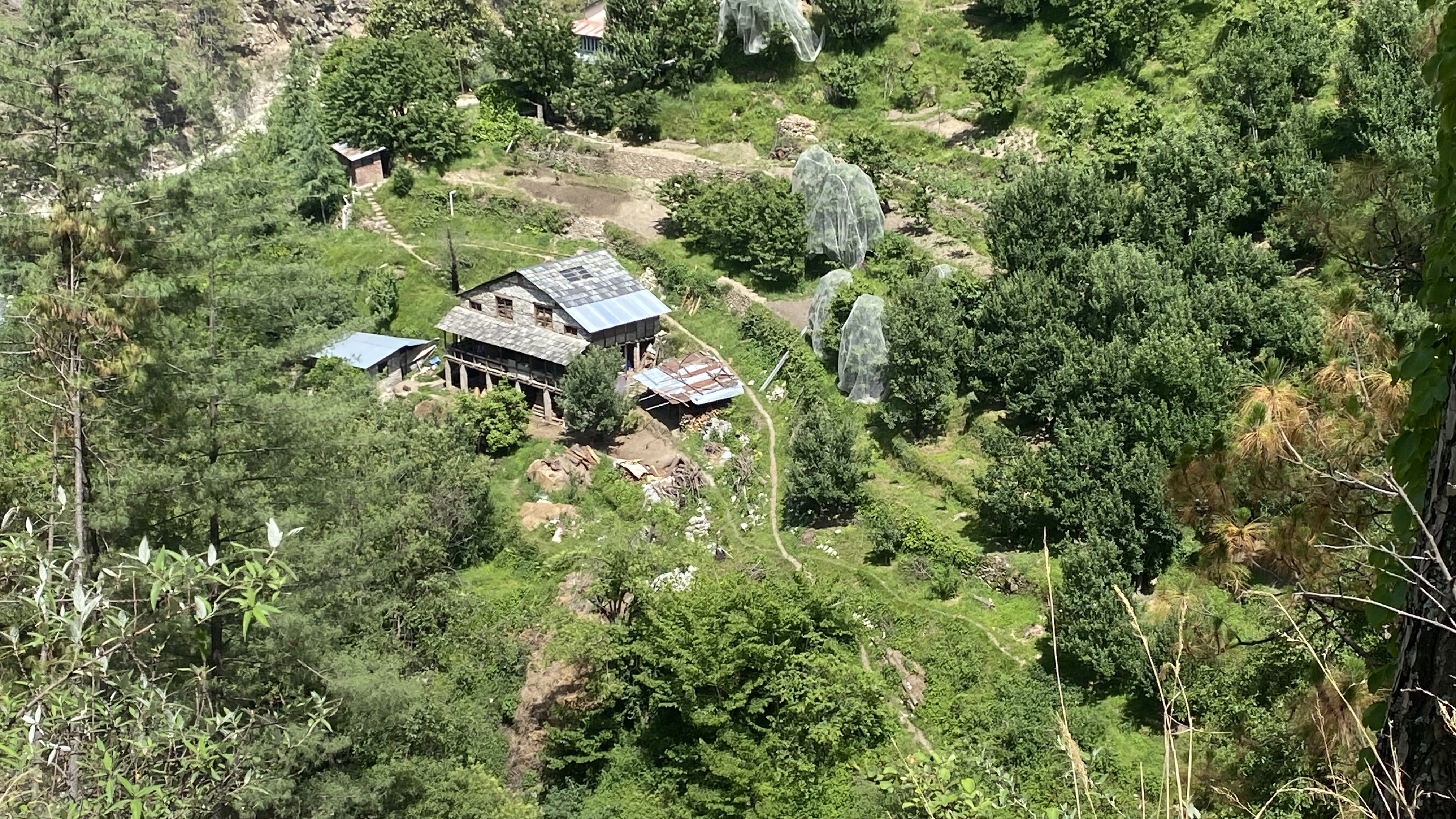
The valley is named after the Tirthan river, a cold, clear tributary of the Beas that runs through it. The landscape is dense — thick oak and rhododendron forest, terraced apple orchards, and stone villages perched at angles that make you wonder how anyone built them. It is louder than it looks: the river roars, birds are everywhere, and the wind through the pines at night sounds like white noise made by the mountains themselves.
It is not an adventure destination in the Manali sense. There are no clubs, no rooftop bars, no busy malls. What it has is good air, genuine quiet, excellent trekking, and some of the most hospitable homestay hosts in Himachal. It rewards slow travel.
Best Time to Visit
March to June is the most popular window. The valley is green, weather is clear, and the passes are open. April and May are peak — book accommodation early. Temperatures range between 10°C and 25°C during the day.
September to November is arguably better for those who prefer fewer people. Post-monsoon Tirthan is dramatically green, skies are crystal clear, and the light for photography is exceptional. October is the sweet spot.
December to February brings heavy snowfall above 2,000m. The valley floor remains accessible but Jalori Pass may close. If you want snow scenery and silence, this works — just go prepared with warm gear.
Avoid July and August. The monsoon brings landslides, road closures, and leeches on the trails. Most trails inside GHNP become treacherous. Some homestays shut down. It is not worth the risk.
How to Reach
The base town is Gushaini, and the nearby village of Jibhi is where most travellers stay.
By air: The closest airport is Bhuntar (Kullu-Manali Airport), about 60 km from Gushaini. IndiGo and Air India operate daily flights from Delhi (roughly 1 hour). From Bhuntar, hire a local taxi — the drive takes about 1.5 to 2 hours and costs ₹1,200–₹1,800.
By bus from Delhi: Overnight HRTC and private Volvo buses run from Delhi ISBT (Kashmere Gate) to Aut on NH3. Journey is around 12–14 hours. From Aut, shared jeeps and local buses connect to Gushaini and Jibhi (1–1.5 hours).
By road from Chandigarh: About 280 km via Shimla or via Mandi. The Mandi route (NH3 to Aut) is faster — roughly 6–7 hours by car. From Shimla via Jalori Pass (Rohru–Jalori road) takes longer but is spectacularly scenic.
By road from Manali: 120 km via Kullu and Aut, around 3 hours. Easy option if you are combining both destinations.
The road from Aut to Gushaini is narrow and winding but paved. In a sedan it is fine. In monsoon it is not.
Where to Stay
Tirthan Valley runs almost entirely on homestays and small guesthouses. This is a feature, not a compromise — the hosts are local, the food is home-cooked, and the experience is genuinely different from a hotel.
Gushaini and the surrounding hamlets (Ropa, Nagini, Bandal) have the highest concentration of stays. Jibhi, 12 km up the road toward Jalori Pass, is a good base for those wanting to day-trip the pass and Serolsar Lake.
Budget homestays: ₹800–₹1,500 per night, usually including all three meals. Most are simple rooms with clean bathrooms and excellent food. At this price point, Tirthan is exceptional value.
Mid-range options: ₹2,000–₹4,000 per night. Riverside cottages, slightly larger rooms, sometimes with a private sit-out facing the forest. Worth it in peak season for comfort.
Book directly or through Airbnb — many of the best stays are not on booking platforms and have WhatsApp numbers listed on Google Maps. Call ahead in peak season (April–June, October).
Places to Visit
Great Himalayan National Park (GHNP): The park covers 754 sq km of high Himalayan terrain and is home to over 375 species of fauna — snow leopard, Himalayan brown bear, musk deer, blue sheep — and more than 200 bird species. Entry requires a permit (₹150 for Indians, ₹600 for foreigners) obtainable at the Sai Ropa gate. You must be accompanied by a certified guide for any trail inside the park — arrange this through your homestay or at the GHNP entry point.
Jalori Pass (3,120m): A mountain pass connecting Kullu Valley to Shimla and Kinnaur, with views across four valleys on a clear day. The road to the top is drivable in good conditions. At the summit there is a small Budhi Devi temple, a dhaba serving hot chai, and the trailhead for Serolsar Lake. Do not underestimate the cold at the top — always carry a jacket regardless of the valley weather.
Serolsar Lake: A 5 km trek from Jalori Pass, gaining about 300m. The lake sits at 3,100m surrounded by thick conifer forest and a small Budhi Nagin temple at its edge. The trail is well-marked and doable in 3–4 hours return. Carry your own water and leave no trace — the lake is a pristine ecosystem and the area has zero waste management infrastructure.
Chehni Kothi: A 17th-century wooden watchtower, reportedly the tallest traditional Kath-Kuni structure in Himachal Pradesh. The hike from the base takes about 45 minutes. The views of Tirthan Valley from the top are excellent. Go in the morning — light is better and the tower gets crowded by noon in peak season.
Jibhi: A small village that has become Tirthan's social centre for travellers. Good cafes, a waterfall 20 minutes upstream, and easy access to Jalori Pass. If you want a quiet walk, the forest path from Jibhi toward Ghiyagi is lovely and rarely crowded.
Tirthan River: Do not overlook the river itself. The stretches near Gushaini are clear enough to wade in summer. Brown trout live in these waters — you can get a fishing permit (₹300/day) to try your hand, or simply sit and watch the water move.
Things to Do
Trout fishing: The Tirthan river is one of Himachal's designated trout fishing zones. Fishing with a permit is permitted March to October. Most homestay hosts can arrange permits and basic equipment. Catch-and-release is encouraged.
Trekking inside GHNP: The park has several trails of varying difficulty. The Rolla Trek (2–3 days) takes you deep into the buffer zone through rhododendron forest. The Raktisar Trek is more demanding and takes you to high alpine meadows. All require a guide and advance planning.
Birdwatching: Over 200 species including Himalayan monal (the state bird of Himachal), koklass pheasant, and various raptors. Early morning along the river and forest edges is the best time. Bring binoculars.
Village walks: The network of footpaths connecting Nagini, Bandal, Ropa and Bandal is one of the most underrated things to do in the valley. These paths were the primary routes before the road was built. You'll walk through apple orchards, past chortens, and through hamlets where daily life continues at its own pace.
Food
Homestay food is the best option and the most reliable. A typical Himachali meal includes dal, rice, seasonal sabzi, and roti — simple, good, and filling. Many homestays will prepare trout if they can source it fresh.
In Jibhi there are several cafes aimed at travellers: Cafe Panchayat, Jibhi Cafe, and others serve maggi, pasta, omelettes, and tea. Prices are fair (₹80–₹200 per dish).
There are no restaurants of any sophistication in the valley. You are not here for that, and it is not needed.
Budget Estimate
A realistic 5-day trip from Delhi, including travel, accommodation, food, permits, and activities:
Budget traveller (bus, basic homestay): ₹8,000–₹12,000 total. Mid-range (flight + riverside cottage): ₹20,000–₹28,000 total. Daily spend in the valley itself (accommodation + food): ₹1,200–₹1,800 on a budget, ₹3,000–₹5,000 mid-range.
Tirthan is one of the most affordable mountain destinations in India for what it delivers.
Suggested 4-Day Itinerary
Day 1 — Arrive and settle: Reach Gushaini or Jibhi by afternoon. Walk along the river in the evening. Eat at your homestay. Sleep early — you have altitude to adjust to.
Day 2 — Jalori Pass and Serolsar Lake: Start by 7am. Drive or take a shared jeep to Jalori Pass (30–45 mins from Jibhi). Trek to Serolsar Lake and back (3–4 hours). Return to base for lunch. Afternoon: explore Jibhi village and waterfall.
Day 3 — GHNP and Chehni Kothi: Morning: enter GHNP from the Sai Ropa gate with a guide. Do the introductory Rolla walk or a guided birdwatching session (2–3 hours). Afternoon: hike to Chehni Kothi for sunset views over the valley.
Day 4 — River day and village walks: A deliberately slow day. Pack a lunch and walk the riverside trail between Gushaini and Nagini. Try fishing if you have a permit. Visit a local home if your host can arrange it.
Practical Tips
Carry cash. ATMs are available in Aut and Banjar; there are none inside the valley itself. Most homestays do not accept cards.
Mobile connectivity is patchy. BSNL has the widest coverage; Airtel works at higher points. Jio is unreliable in parts of the valley. Download offline maps before you arrive.
Book accommodation before arriving in peak season (April–June, October). The good homestays fill up. Do not assume you can walk in.
Permits for GHNP can be obtained at the Sai Ropa gate, but guide booking should be done in advance through your accommodation or the GHNP office in Sai Ropa.
Pack layers. Even in May, evenings at 1,500m are cold. Jalori Pass at 3,120m can be near-freezing in the morning regardless of what month you visit.
Leave no trace. The valley's appeal is directly tied to its environment. Carry out all waste, use refillable water bottles, and do not disturb wildlife inside GHNP.
Photos

The Tirthan river — cold, clear, and full of trout
Photo by Uday Pratap Singh Atwal on Unsplash
Dense oak and rhododendron forest lines the valley floor
Photo by Uday Pratap Singh Atwal on Unsplash
Traditional Kath-Kuni architecture disappearing into the morning mist
Photo by Chitransh Jain on Unsplash
Winter in Tirthan — the valley transforms between December and February
Photo by Chitransh Jain on Unsplash
The trails above Tirthan reward the effort — views across four valleys
Photo by Rahul Dey on Unsplash